
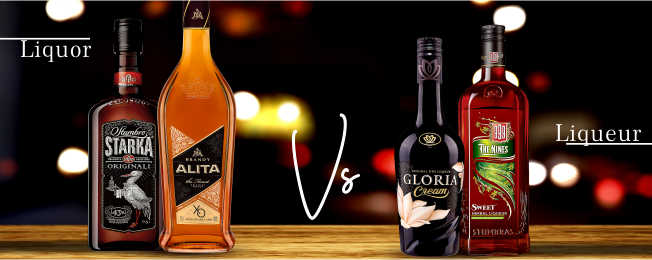
In the world of creative cocktails and spirits, there are many types of alcohol out there and so many different terms that get thrown around. If you are like us and love beverages and cocktails, then you need to comprehend what some of these terms signify. Liquor and liqueur are some of those beverage terms that get cocktail lovers confused, they sound and spell similar, yet different in meaning. Although both are distilled spirits that contain alcohol and are crucial ingredients when mixing cocktails, the liquids are not the same and the terms are not similar. Guess what? Buddies we are more than happy to properly explain these two terms; highlight their similarities and differences, thereby making it easier to create your cocktails with confidence. Let’s start with Liquor, the more common of the two terms.
Liquor
Liquor is simply described as any distilled beverage (alcoholic) made of plants or grains and concocted into a potent drink. Simply put, staples like Gin, Vodka, Rum, and Tequila are all forms of liquor. Often referred to as a base of cocktails and mixed drinks, it can be enjoyed on the rocks and neat. It is also referred to as “hard alcohol’’ and they remain the oldest forms of alcohol in the world. Moreover, Liquor has an alcohol content of 20% to 40%. Another defining characteristic of liquor is, it is “unsweet”, though sugar is used to ferment the liquor. Even when flavoured, the taste is unpleasant.
Liquors are made through distillation. To begin with, an alcoholic liquid will be made by fermentation – similar to how wine is produced, then this liquid will be put into a “still” where the alcohol will be extracted in relatively high concentration. The result becomes a “distilled spirit” that can be aged respectively. The most significant thing to know about liquors when using them in cocktails is that they make your drink taste “hot” or alcoholic.
Liqueur?
A liqueur is sweet by nature; in fact, this term is used to describe these sweetened spirits that are made with unique flavours and extracts. Liquor, like rum, brandy and whiskey can all be used as a base spirit for a liqueur, which is confusing for some of us. Typically, liqueurs have an alcohol content of around 15% but can be as high as 55%. There are so many different flavours of liqueurs as well ranging from sweet and creamy, to citrus-flavoured and everything in between. One of the most popular liqueurs is Gloria Crème Liqueur, which is cream-coffee flavoured and used in many cocktails. Liqueurs are a fairly common ingredient in cocktails, because of their ability to bring an extraordinary depth of flavour and complexity to a cocktail.
Many liqueurs can frequently be drunk on their own without mixers or complicated cocktail recipes as they are so sweet and smooth. Another characteristic of liqueurs is their consistency – they are thicker and more viscous than liquors. That justly said, liqueurs always bring sweetness. As we mentioned earlier, if they didn’t bring sweetness, they wouldn’t be liqueurs! Therefore, if you’re including liqueur to an existing cocktail recipe, be sure to adjust other sweeteners, the result gives your classic cocktail a unique taste.
Buddies, we have cleared the confusion. You now know the difference between liquor and liqueur. Go ahead and call yourself an expert on this topic and start creating unique cocktails at home.
Thank you for stopping by AGAIN! lol

