
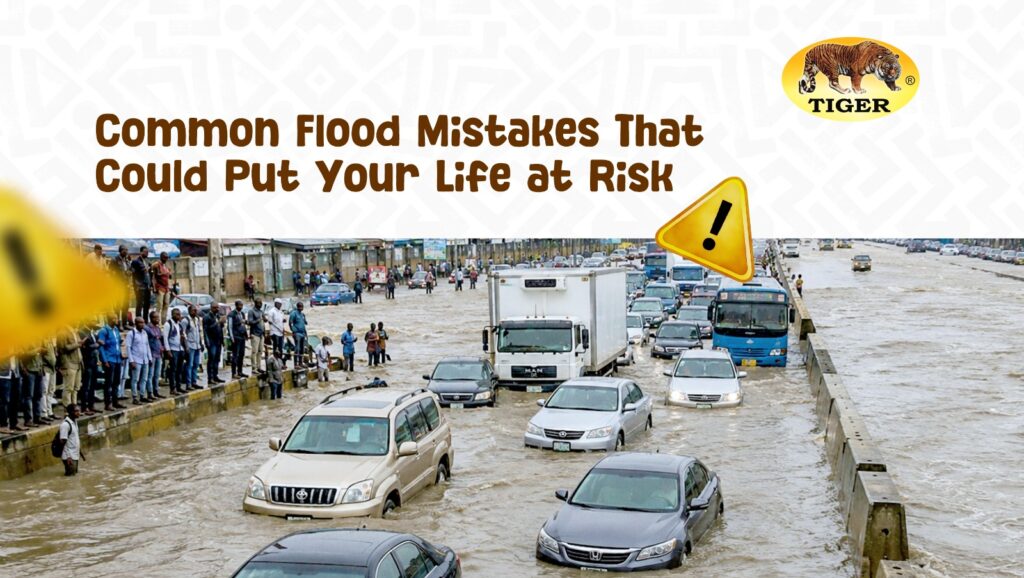
'Na small water, I fit cross am.'
A few minutes later, your car stalls, your slippers float away, and you're desperately looking for dry ground.
Flooding is more dangerous than many people realise. It can destroy homes, disrupt businesses, contaminate water sources, spread diseases, and most importantly, claim lives.
The sad part is that many flood-related accidents happen because people underestimate the danger or make avoidable mistakes.
Common mistakes people make during floods and how to avoid them:
- Walking or Driving Through Floodwater
The water may appear shallow, but floodwater can hide open gutters, potholes, broken drainage systems, and sharp objects.
Walking through it could cause you to fall into a hidden drain, become submerged, or be swept away by the flood.
Driving through floodwater is equally dangerous, as your vehicle could stall, be carried away by strong currents, or suffer costly engine damage.
What to do instead:
Avoid flooded roads. Wait for the water to recede or use a safer route.
- Leaving Electrical Appliances Plugged In
If your house is flooded, please know that water and electricity are a dangerous combination.
Floodwater can damage electrical systems and increase the risk of electric shock or fire.
What to do instead:
Turn off your main power supply if it’s safe to do so and unplug electrical appliances before floodwater reaches your home.
- Making use of Floodwater.
Floodwater is often contaminated with sewage, chemicals, fuel, broken glass, and harmful bacteria.
Using it for washing food, walking through it, or swimming in it can expose you to diseases such as cholera, typhoid, and diarrhoea.
What to do instead:
Always use clean water to wash fruits and vegetables. Avoid walking through floodwater and keep children away from it.
- Ignoring Mosquitoes After a Flood
After heavy rains and flooding, stagnant water becomes the perfect breeding ground for mosquitoes.
This increases the risk of malaria and other mosquito-borne diseases.
What to do instead:
Drain stagnant water around your home, sleep under a mosquito net, and keep your surroundings clean.
- Not Keeping Your Important Documents Safe
Replacing damaged documents can be stressful and expensive.
Keep important documents such as certificates, passports, birth certificates, and property documents safe from floodwater.
What to do instead:
Keep important documents in waterproof bags or containers and store them in a safe, elevated location.
- Thinking It Can't Happen to You
Don't assume floods only happen to other people.
Heavy rainfall can affect any community.
If floodwaters begin to rise or authorities issue an evacuation order, move to higher ground or a safe shelter immediately.
What to do instead:
Clear any blockages in drainage, never dump refuse into gutters, and prepare an emergency plan to keep your family safe during flooding.
A few simple precautions today can help protect your family, your home, and your valuables tomorrow.
Have you ever experienced flooding in your area?
What lessons did you learn?
Did we miss out any detail? Drop it in the comments
Share your experience; it could help someone else stay safe.
See you in the next one!

