
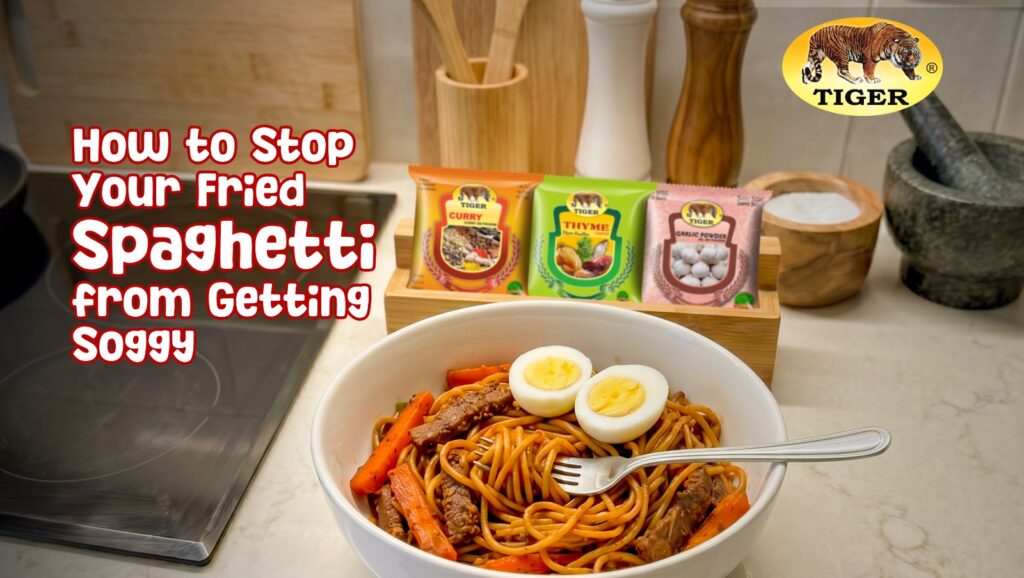
The heartbreak of preparing spaghetti and it ends up sticking together and too soft like porridge is real.
You spent your money buying ingredients, spent time in the kitchen, only to end up with a plate of mushy, sad, clumped together pasta that looks like paste.
It is painful o!
But let’s break it down for you on how to achieve the perfect Nigerian fried spaghetti, where every single strand stands on its own, perfectly coated in rich spices, tomatoes, and veggies.
1. Parboiling Spaghetti, Don't Overdo It!
This is where most people get it wrong. You put the spaghetti on the fire and then get distracted scrolling through TikTok. Before you know it, the spaghetti has become too soft and mushy.
What works: You only want to cook it until it still has a little bit of stiffness in the middle. Leave it half-cooked.
How to know: If you break a strand, you should still see a tiny white speck in the centre.
If it is already soft and bouncy in the pot, forget it; you have already overcooked it, and it will go soggy when you fry it in the sauce.
2. The Ice Water Shock Tip
Immediately you drain the hot water, open the kitchen tap and run cold water over the spaghetti. Rinse it quickly.
This stops the cooking instantly and washes away the excess starch that makes the strands stick together.
What works: This cools it down instantly and locks the shape, so the strands don't stick together.
3. Let it Dry! (Don't Rush)
After rinsing the spaghetti with cold water, leave it in a sieve to drain well. Give it a little shake to remove excess water.
The drier the spaghetti is, the better it will look and taste. If you pour wet spaghetti straight into the pan, it can become soggy and sticky.
Too much water on the spaghetti will make it softer and mushier. Take a few extra minutes to let it drain properly.
4. Add the Spice and Seasoning to the Sauce
This is a major secret that many people miss. Let me explain why this completely changes the game.
When you throw your spices and seasoning directly onto the spaghetti while frying it, two bad things happen.
• The powder doesn't combine evenly, so you end up with some parts tasting like pure salt and other parts tasting like nothing.
• Second, because you are trying to desperately stir and toss the pasta to spread that dry seasoning around, you end up keeping the spaghetti on the fire for way too long.
The more you stir and leave it on the heat, the softer and soggier it gets.
So, before the spaghetti ever touches that frying pan, make sure your meat base and your sauce is already fully seasoned with your Larsor Jollof Seasoning and spiced well with Tiger Curry, Thyme, Ginger and Garlic.
Why this works: The above-mentioned spices like need oil and moisture to wake up their flavours.
Adding them to the sauce first does two great things at once:
• It maximises the flavour so your food tastes amazing, as the sauce is already a powerhouse of flavour, and it reduces the cooking time after adding the pasta.
• It blends the taste smoothly into the liquid, so you don't have to over-stir your spaghetti on the fire trying to mix it in.
Less time on the fire means zero room for sogginess!
5. High Heat and a Big Pan
Fried spaghetti is not stew; it doesn’t need to simmer on low heat for a long time.
You need high heat so that the sauce can coat and fry the pasta quickly, without overcooking it with low heat.
What works: Make sure your frying pan or pot is big enough so the spaghetti isn't crowded.
If you pack too much stuff into a small pot, it creates steam, and steam equals sogginess. Fry in batches if you must.
Did these tips help? Will you try them?
Share this with friends or family, it could help them too. Do well to like and comment on your idea.

